
Forex broker license

Why a Forex Broker License is Necessary?
Legal Compliance
Having a Forex broker license ensures legal compliance. Without it, a firm may face penalties, fines, or even closure. Licensing enables a broker to operate under the laws of the jurisdiction in which it is issued.
Credibility and Trustworthiness
A license fosters credibility, instilling trust in clients. In a high-risk market like forex, having a license signifies that a broker adheres to standard operational procedures, financial regulations, and consumer protection laws.
Access to Financial Markets
A Forex broker license allows for direct access to financial markets. It permits brokers to conduct transactions, making it vital for their operations.
Process of Obtaining a Forex Broker License
Business Plan and Preparation
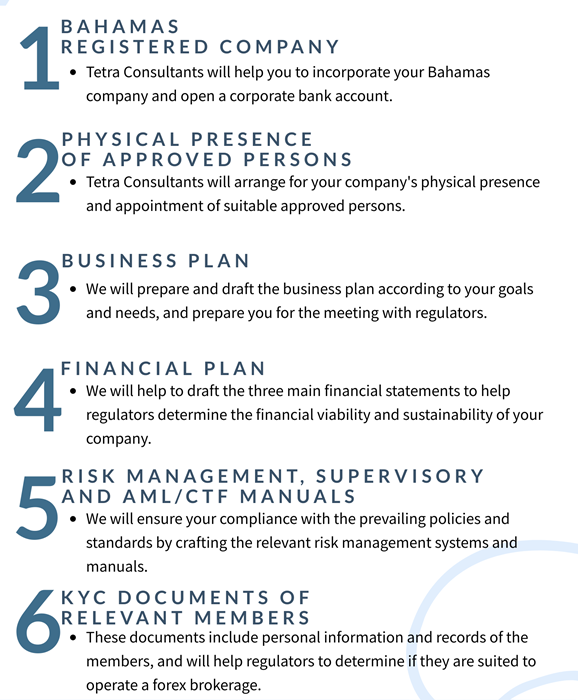
Before applying for a license, a firm must prepare a robust business plan outlining its operational model, financial projections, and risk management strategies.
Choosing the Right Jurisdiction
Brokers must choose the jurisdiction in which they wish to operate, bearing in mind that regulatory requirements differ across regions.
Filing the Application
After preparing a solid business plan and choosing a jurisdiction, the firm files its application with the necessary documentation to the relevant authority.
Criteria and Requirements for Forex Broker License
Capital Requirements
Forex brokers must have sufficient capital to protect their clients’ interests and ensure operational stability.
Regulatory Requirements
Brokers must adhere to the regulatory standards of their chosen jurisdiction. These may include anti-money laundering (AML) rules, Know Your Customer (KYC) procedures, and more.
Costs Associated with Obtaining a Forex Broker License
Obtaining a Forex broker license isn’t without costs. These may include application fees, legal costs, consultancy fees, and ongoing compliance costs.
Challenges in Obtaining a Forex Broker License
The process of acquiring a Forex broker license can be tedious, given the numerous requirements and strict regulations. Mistakes in the application process, insufficient capital, and lack of a robust business plan are among the potential challenges.


Selecting a Consultancy Firm for Forex Broker Licensing
Choosing a reliable consultancy firm can streamline the licensing process. Such firms offer expert advice and help in navigating the complex regulatory landscape.
Licensing Process in Different Jurisdictions
Licensing in the United States
In the US, Forex broker licensing is managed by the National Futures Association (NFA) and the Commodity Futures Trading Commission (CFTC).
Licensing in the United Kingdom
In the UK, Forex brokers must be authorized by the Financial Conduct Authority (FCA).
Licensing in Australia
In Australia, Forex brokers are regulated by the Australian Securities and Investments Commission (ASIC).
Licensing in Estonia
In Estonia, Forex brokers are licensed by the Estonian Financial Supervision Authority (EFSA).

Maintaining Compliance Post Licensing
Obtaining a Forex broker license is just the beginning. Brokers must maintain compliance by adhering to ongoing reporting requirements, conducting regular audits, and continually meeting capital requirements.
How Technology can Aid in Forex Broker Licensing
Technology can simplify the licensing process, from automating application submission to managing compliance effectively. Tools like regulatory technology (RegTech) can be instrumental in this regard.
The Impact of Forex Broker License on Business Operations
A Forex broker license significantly impacts business operations, opening doors to more markets, enhancing reputation, and promoting client trust.

Case Study: Successful Forex Broker Licensing
An exploration of a successful case study highlights the benefits of obtaining a Forex broker license and its implications for business growth.
Common Myths and Misconceptions about Forex Broker License
Despite its importance, there are numerous misconceptions about Forex broker licensing. These range from the belief that it’s an unnecessary expense to misunderstanding its role in ensuring fair and secure operations.
A Forex broker license is crucial for brokers. It ensures legal compliance, fosters trust with clients, and grants access to global markets. Despite the challenges and costs associated with obtaining a license, the benefits it provides make it a worthy investment for any Forex brokerage firm.
FAQs
Why is a Forex broker license necessary?
A Forex broker license is necessary because it ensures legal compliance, fosters trust among clients, and grants access to global markets. By having a license, a Forex broker shows that they operate according to established regulations and standards, providing security for their clients and themselves.
How does one obtain a Forex broker license?
To obtain a Forex broker license, a firm must first prepare a comprehensive business plan, choose a suitable jurisdiction based on their business model and regulatory comfort, and then file an application to the respective regulatory authority with the necessary documentation. It's a rigorous process involving various regulatory compliance and capital requirements.
What are the costs associated with obtaining a Forex broker license?
Costs associated with obtaining a Forex broker license include application fees, legal costs, consultancy fees, and potentially more depending on the jurisdiction. After acquiring the license, there are also ongoing compliance costs to maintain the license.
How do Forex brokers maintain compliance post-licensing?
Forex brokers maintain compliance post-licensing by adhering to regulatory standards set by their respective financial authorities. This can include ongoing reporting requirements, regular audits, and continual adherence to capital requirements, as well as upholding anti-money laundering (AML) and Know Your Customer (KYC) procedures.
What are common myths about Forex broker licensing?
Common myths about Forex broker licensing include the belief that it's an unnecessary expense or a mere formality. In reality, obtaining and maintaining a Forex broker license is essential for legal operation, securing client trust, and accessing global markets. It's a valuable investment that can greatly impact a Forex broker's growth and reputation.